
The Hidden Accelerator: Why High Humidity Is Destroying Your Property's Structure
The Silent Threat: How High Humidity Leads to Exponential Wood Rot
In our region, humidity isn't just an annoyance; it’s a constant, aggressive force pushing against your building’s structural integrity. Many homeowners and commercial property managers underestimate the damage that elevated moisture levels can cause, assuming that as long as there is no standing water, the structure is safe.
At Lowcountry Foundation and Crawl Space Repair, we see the devastating effects of high humidity every day. What starts as a small, damp spot can quickly evolve into a massive structural failure because wood rot doesn't just grow linearly—it grows exponentially.
Why Humidity is the "Accelerator" for Decay
Wood rot is caused by fungi that thrive in specific environmental conditions. These fungi are dormant in dry conditions, but once the relative humidity in a crawl space or basement exceeds 60–70%, the clock starts ticking.
When humidity remains high, wood absorbs moisture from the air, raising its "moisture content" (MC). Once wood reaches an MC of 20% or higher, it becomes an ideal breeding ground for wood-decay fungi.
The "Exponential" Problem: Why It Spreads So Fast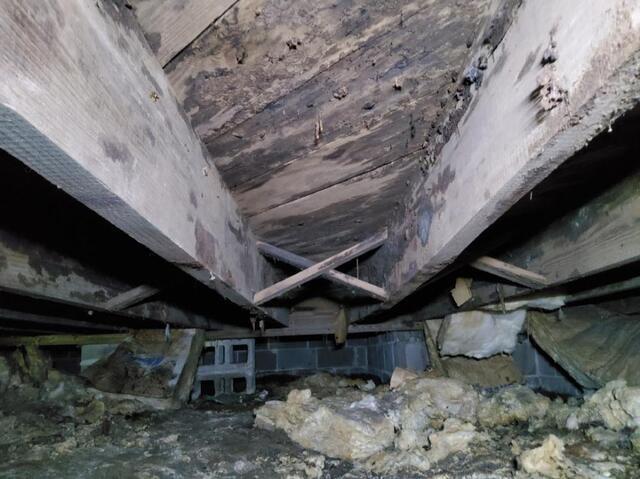
The reason wood rot can devastate a building so quickly is due to how these fungi reproduce and spread:
-
Spore Dispersal: Once the rot takes hold and begins to fruit, it releases thousands of microscopic spores into the air.
-
Increased Surface Area: As the initial layer of wood begins to soften and break down, it becomes more porous, allowing it to hold even more moisture.
-
The Feedback Loop: This increased moisture absorption accelerates the fungal growth, which produces more spores, which then land on adjacent beams, joists, and subflooring.
What was a localized issue in one floor joist can migrate to the entire foundation structure in a single season. The fungi effectively "farm" the wood, breaking down the cellulose and lignin that give your home its strength.
The Signs You Should Look For
-
Musty Odors: This is often the first indicator that rot is already active.
-
"Spongy" Feeling: If your floors have soft spots or feel bouncy, the structural integrity of the subfloor may already be compromised.
-
Discoloration: White, yellow, or brown patches on your floor joists are clear signs of fungal colonization.
-
Peeling Paint or Wallpaper: High interior humidity often manifests as moisture pushing through your walls.
Stopping the Cycle
You cannot simply "patch" wood rot; if you replace a rotted joist but leave the high-humidity environment unchanged, the new wood will simply begin to rot as well. To stop the cycle, you must address the source:
-
Encapsulation: By sealing the crawl space with a CleanSpace Encapsulation, we isolate your home from the moisture rising from the soil.
-
Dehumidification: A Sanidry Sedona is essential for maintaining a stable, dry environment (typically below 55% relative humidity) that stops fungal growth in its tracks.
-
Structural Repair: Once the environment is controlled, we can safely replace or reinforce any damaged structural members to restore your building’s stability.
Don't Wait for Structural Failure
Wood rot is not a "wait and see" situation. By the time you notice sagging floors, the underlying damage is often significant. Protecting your property from high humidity is the most cost-effective way to avoid massive repair bills in the future.
Are you concerned about moisture levels in your property? Our team is here to help you get ahead of the rot.