Crawl Space Repair Photo Album: Symptoms of a Moisture Issue in Stockbridge, GA
This home in Stockbridge, GA started to have some issues after being purchased concerning the floor and the crawl space. The floor was settling and uneven. The homeowner believed the issue to be a lack of support in the crawl space from renovations the previous homeowner made, but they wanted to be sure of the extent of what was going on, so they called Lowcountry Foundation Repair for a free inspection of the foundation to evaluate what could be done to solve the issue.
Our inspector came out and did a full evaluation, writing up a complete solution to fully solve all the existing foundation problems. The inspector found multiple areas requiring support and revealed to the homeowner that there was a serious moisture issue in the space causing the wood foundation to weaken over time. In order to fully protect and support the foundation, our inspector recommended adding SmartJack Support in 4 areas to support and level the floor, then have the crawl space encapsulated with the CleanSpace Encapsulation System to protect the wood from rot, mold, and microbial growth.
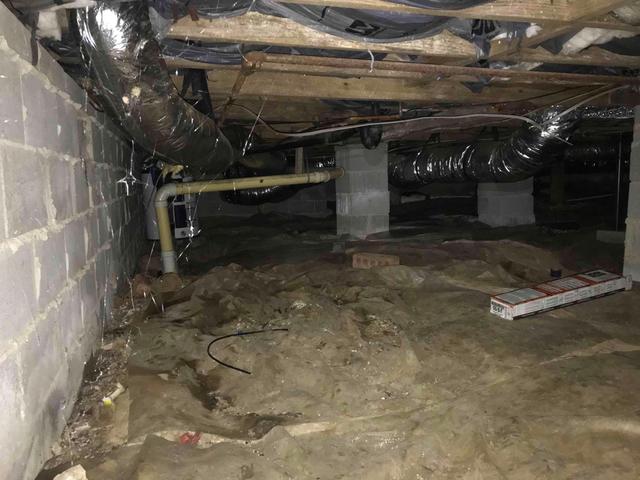
Supplemental Support Required
The crawl space had existing concrete block piers that were not providing enough support in the right areas to take the weight of the home, especially considering the home has a second floor.
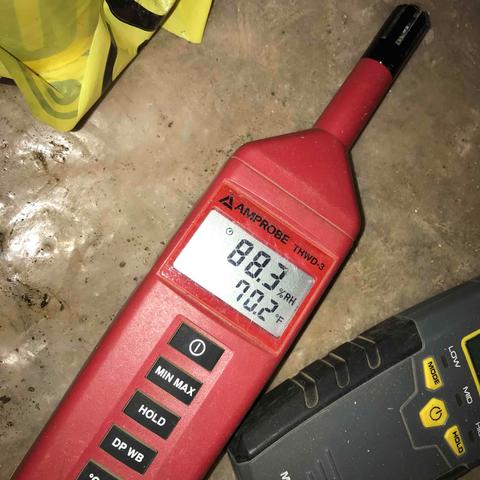
High Air Humidity Level Measurement
The initial reading of the relative humidity in the crawl space was very high at 88%. The humidity in the crawl space should be kept at a safe 55%.
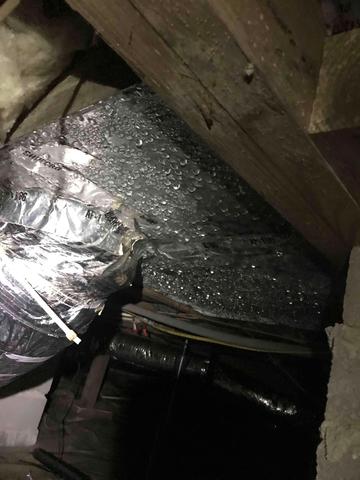
Condensation Dripping from Ducts
The home's AC was located in the crawl space. The cool conditioned air draws moisture from the air, creating condensation that soaks into the wood of the home over time, leading to rot, mold, and drawing the interest of wood-boring insects like termites and powderpost beetles.
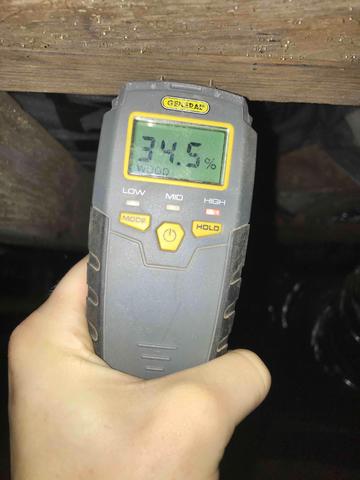
Very High Wood Moisture Measurement
Here is an image of the wood moisture reading, over twice the recommended moisture level for wood in crawl spaces. The reading should be at about 10-16%. There is also noticeable microbial growth on the wood.